
Digital Pasifik

Digital Pasifik brings together Pacific cultural heritage held across museums, libraries and archives worldwide, making it easier for people in and of the Pacific to discover and access it.
Boost delivered the platform with our data aggregation software, Supplejack.
“The way Boost worked has been why we could be so successful. They really took on board the feedback and found solutions to make the website useful for people in the Pacific. People have really enjoyed seeing their feedback come to life and make an impact on the website.”
The Pacific Virtual Museum team set out to make Pacific cultural heritage more visible and accessible to the communities it belongs to.
Items, records and stories connected to Pacific cultures are held in institutions across the world, as well as within Pacific-based organisations working to preserve and share their own collections, often with limited resources.
The goal was not to centralise these materials or create a new digital repository. It was to create a platform that connects people with cultural heritage, and celebrates the institutions that care for it.
That meant:
From the outset, the project prioritised connection over control.
Digital Pasifik was shaped through co-design with cultural heritage practitioners and community representatives drawn from across the Pacific, as well as Aotearoa, Australia and the United States. The group included over twenty participants to ensure the platform reflected Pacific perspectives - not just in its visual language, but in how cultural heritage was defined. Oral histories and community-generated knowledge were treated as integral, not secondary, and prioritised in key site features.
“It’s been a privilege to work with the co-design team.”
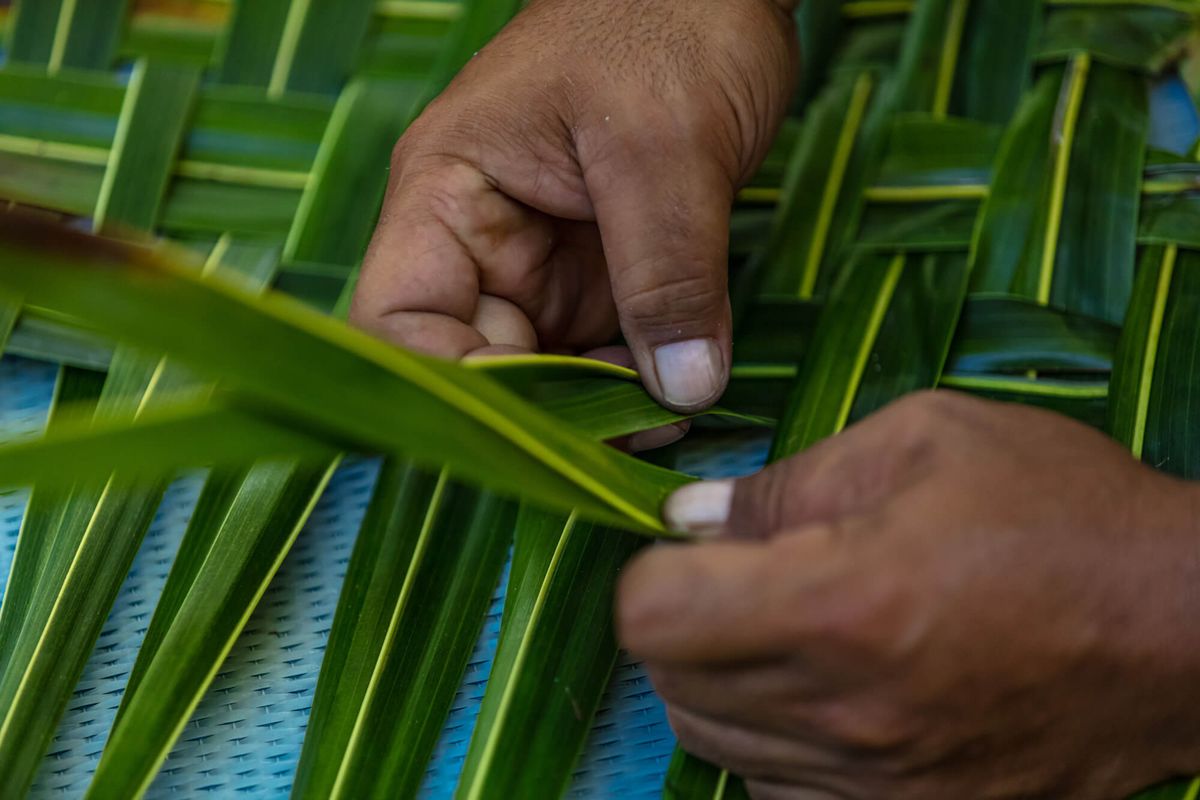
User contributions fields allows users to add knowledge and context to records, recognising people and places or contributing personal stories and interpretations not captured in institutional catalogues. In the words of Product Owner Taputu Rea, user contributions “make items come back alive”, reconnecting them with lived experience and contemporary knowledge.
The feature enables Pacific communities to share their stories using their own languages and cultural names. When these terms are used in the search function, they can be discovered more easily, helping address the gaps where such cultural language is missing from institutional metadata.
“The whole experience had a high integrity approach which invited difficult questions from all those involved so that the heavy emotional and intellectual load was not put on the users. It also didn’t privilege the partner institutions over “anonymous” users.”
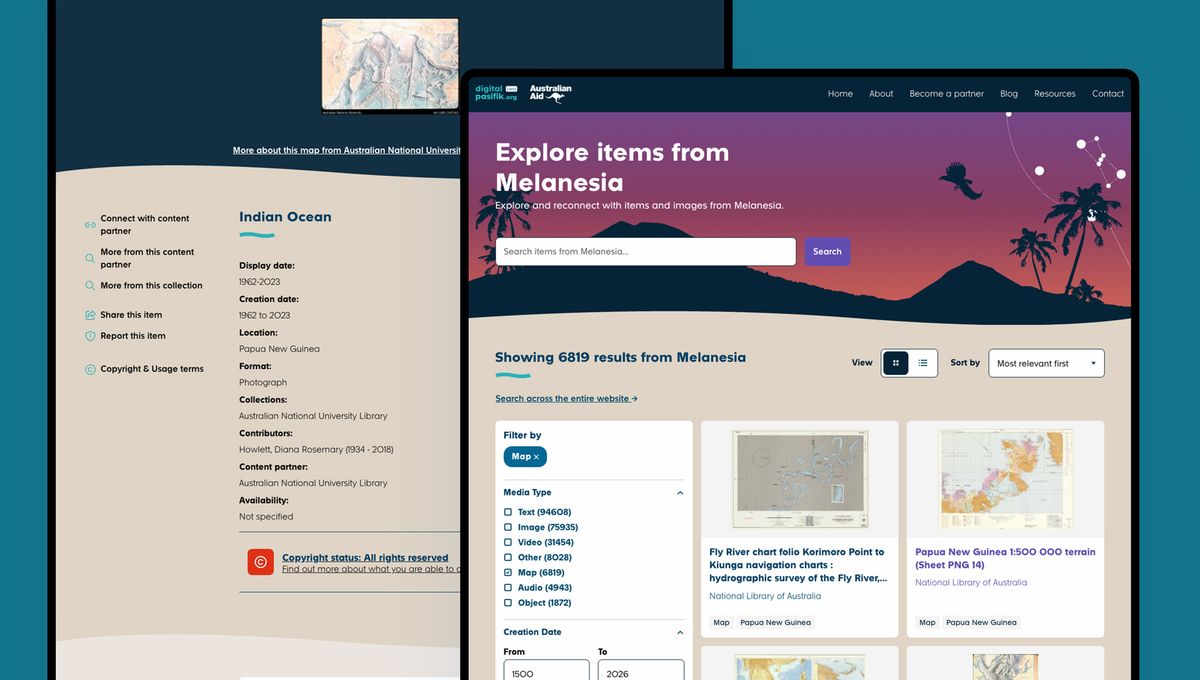
Co-design also reinforced the importance of highlighting the mahi of Pacific-based institutions. For some organisations, Digital Pasifik provides one of the few visible online entry points to their collections. Dedicated partner pages foreground the institutions, reinforcing their authority and ownership of the material. The platform increases the visibility of collections without displacing the institutions that care for them.
“Delighted & humbled to be invited onto @digitalpasifik as a content partner with my show ‘Fiji BC’! It’s great to see Fijian cultural content shared on more online platforms & being on @digitalpasifik is a real boon for #Teamfiji traditional knowledge. Vinaka vakalevu!”
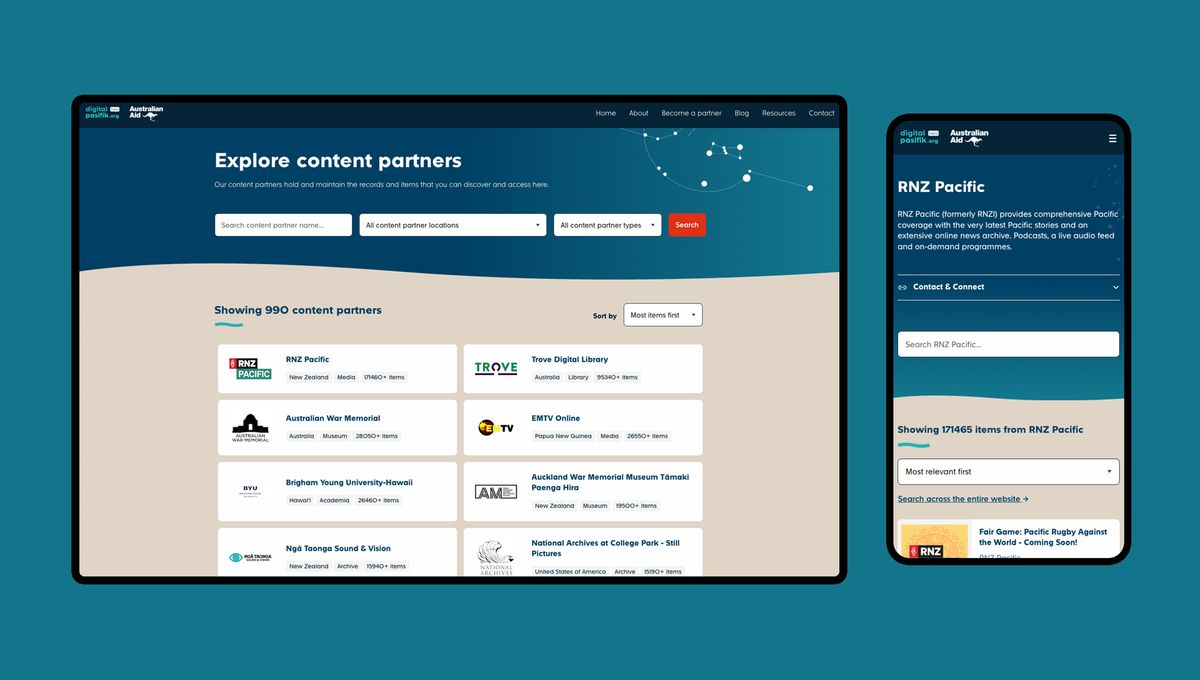
User testing revealed feedback such as, “My grandmother can speak English but she cannot read it.” This was incorporated into the website’s design and accessibility improvements.
The interface prioritises imagery, icons and clear visual cues over dense text. Essential metadata is presented consistently, and reading is kept to a minimum. It supports users across multiple languages and literacy levels, and remains usable in low-bandwidth environments where heavy content would be a barrier.
Co-design sessions emphasised the importance of cultural identity to the way people navigate and relate to the site.
“Identity is a really important thing in the Pacific and the way the website flows - I’m from the Cook Islands, I can instantly see the Cook Islands.”
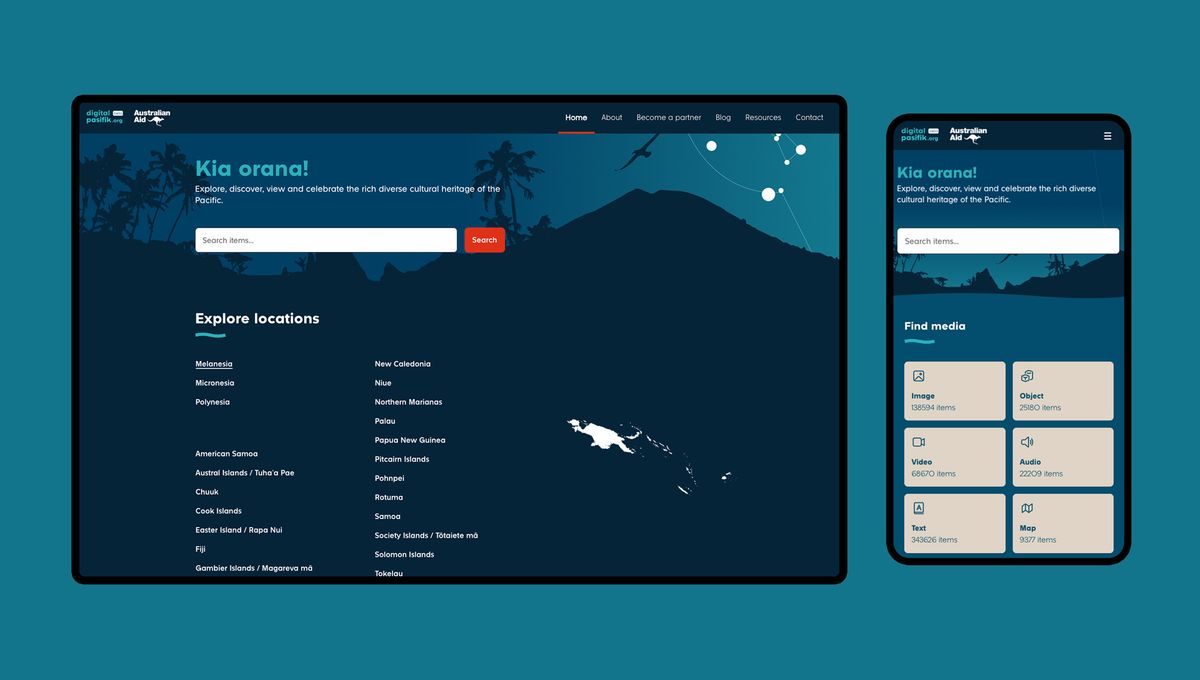
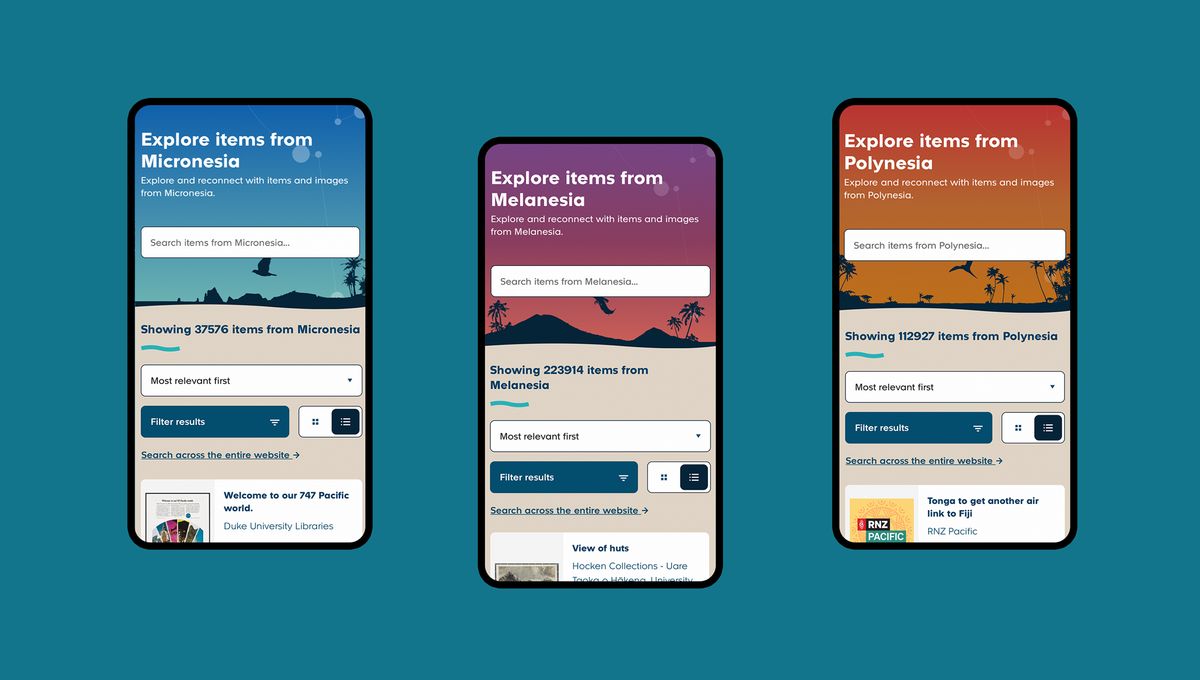
Boost designer Nick Schuler invited members of the co-design group to share images of their countries. These informed the visual treatment of individual country pages - from the hills and highlands associated with parts of Melanesia, to the island forms of Polynesia and the rocky terrain of parts of Micronesia.
“The graphical design of the site was a complex matter but it was handled with the type of care and effectiveness that was able to meet the needs of so many countries and territories as well as make it visually appealing and workable whether using a PC or a mobile phone.”
The architectural foundation of Digital Pasifik makes its purpose possible. Digital Pasifik does not store or own cultural records. Instead, it aggregates metadata from partner institutions and directs users back to the source collections.
Using Supplejack, the platform harvests and transforms metadata from multiple sources into a consistent structure, enabling unified search across hundreds of thousands of records. Harvests run regularly, so updates made by content partners are reflected automatically.
Partner institutions retain ownership and authority over their records. In the event the site were taken offline, nothing would be lost. Supplejack enables this model by aggregating and structuring metadata without moving or taking control of the underlying collections. The result is a platform that increases visibility without centralising control - a bridge rather than a repository.
“This work showed that when you make the effort to advocate for Pacific heritage you can even get the big institutions to re-think how they do things like metadata, and preservation plans which now include Pacific materials and are more and more beginning to reflect Pacific concerns.”