Discover everything you need to know to make your mark in the Scrum Product Owner role.
“As a Scrum Product Owner, you get to make the world a better place, one customer at a time.”
Scrum is designed to help Product Owners succeed. The goal of the Scrum Product Owner and the goal of the Scrum framework are one and the same: maximising the value delivered to the customer.
In this guide you’ll learn how to:
We've pulled everything we know about succeeding as a Product Owner into one comprehensive PDF download.
“A great resource ... extremely thorough!” — Jess Limbrick, Product Owner, Life Education
Buy your guide
How does the Scrum Product Owner maximise the value delivered to customers? By knowing what customers value, what your organisation wants to achieve and what your Scrum Team needs to work effectively. Then all you have to do is deliver all these things. Easy, eh?
The key to success in this challenging role is adopting an Agile mindset, so that the principles and values of Agile and Scrum become second nature.
In Scrum, the Product Owner is responsible for the Product Backlog.
The Product Backlog is the prioritised list of outcomes the product needs to achieve. It flows out of your:
The Scrum Product Owner develops the vision for the product — the way it will improve the lives of your customers — and the strategy that will let you achieve both this vision and the goals of your organisation.
You lead the work with stakeholders to discover what product will bring the greatest benefits to your customers.
You communicate what you discover to the Scrum Team who build the product, with the Product Backlog as your key tool.
Together with the developers and the Scrum Master of the Scrum Team, you build working solutions — working versions of the product — in a series of short iterations.
Your work is guided by a series of meetings or events. These let you and the Scrum Team agree how they’ll achieve the outcomes specified in the Product Backlog, keep tabs on your work and make changes where there’s opportunity to improve.
The Scrum Product Owner role is central to the success of the product. You channel the customers’ needs, respond to the business’s drivers and collaborate with the Scrum Team to create a kick-ass product.

Scrum is one of a number of Agile frameworks. Agile is a philosophy, a set of values and principles, that guide the way you work. Until the Agile mindset becomes second nature, Scrum gives you a clear structure and process to follow, as defined by the Scrum Guide.
Scrum works on the principle that decisions are better based on what you know than on guesswork.
In Scrum you develop working solutions in regular, short iterations, working collaboratively and transparently in self-organising and self-contained teams, and inspecting and adapting as you go.

Here’s how product ownership expert Jeff Patton sums up the aims of each role:
The Product Owner is an integral part of the Scrum Team. You use your understanding of customer needs and organisational goals to create a vision and a strategy for your product, which you communicate via the Product Backlog.
To do this you need to be:
While being a Product Owner is a collaborative process, the Scrum Guide states that the Product Owner is one person. However, occasionally it may be preferable to have multiple Product Owners. Learn how you can make multiple Product Owners work in Scrum.
The Development Team build your product. They’re the coders, designers, testers and so on. The team is cross-functional and self-organising. Because they have all the skills they need to do the work, you avoid delays caused by handover. As Product Owner, you don’t assign tasks to individual team members and only they decide what is achievable each Sprint, and how it is achieved.
The Scrum Master shows the whole Scrum Team how to do Scrum. They make sure that the team is working well together, that they are following the Scrum framework, and that nothing is blocking their work.
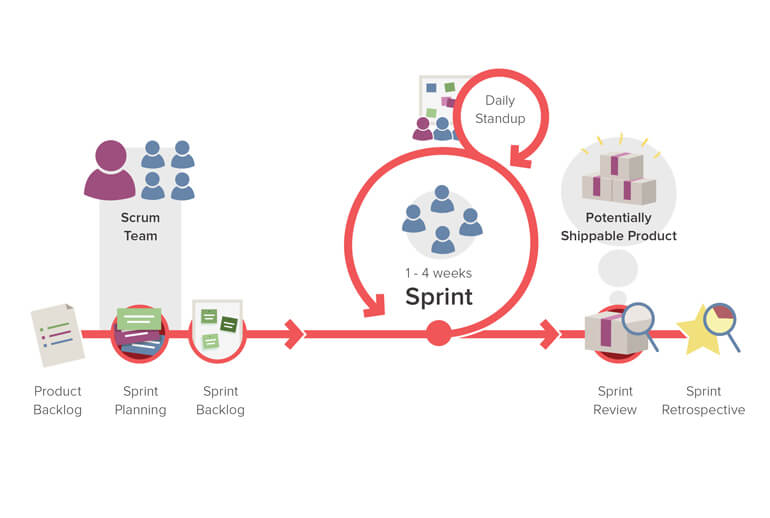
Scrum has three artifacts that are used to track your work in a way that ensures everyone can see and understand what’s involved:
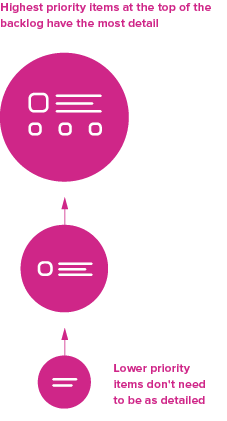
The Product Backlog is a prioritised list of everything that is known to be needed in the product. It describes outcomes — the benefits the product will deliver. As Scrum Product Owner you decide what goes in, and what the priorities are.
In Scrum, the iterations are called Sprints. The Sprint Backlog is the team’s trackable to-do list for the current iteration. It’s selected from the Product Backlog, and discussed so everyone knows what needs to be done to deliver the next Increment.

The Increment is the next step towards achieving your vision as Scrum Product Owner. It’s what you get when you add the results of the current iteration to the product created by all the previous Sprints. The Increment needs to be “Done” — it needs to give you a working solution that you could test with users.

Sprints are regular iterations of no more than a month. Each Sprint has a cycle of meetings in which the Scrum Team plan, monitor and improve both product and processes.
The whole Scrum Team plans the work for the next Sprint. The Development Team runs through items from the Product Backlog in priority order, estimating the amount of work involved and choosing those they forecast they can complete.
The Development Team coordinate the upcoming day’s work at the Daily Scrum. To keep it short (under 15 minutes) many teams stand up for the meeting.
For the Scrum Product Owner, the Sprint Review is your chance to put the latest Increment of your product through its paces. You get to show off your progress to stakeholders and learn from their feedback.
Where the Sprint Review looks at your Product, the Retrospective looks at your processes. The Scrum Team inspects itself and identifies ways it can improve.
Next step: Get a detailed introduction to Scrum.

In Scrum you’re more collaborator than client.
Ideally you’ll be colocated with the rest of the Scrum Team. This means you can make use of the most powerful communication tool available: face-to-face discussion.
Developers work most effectively when a Product Owner knows the product well, and communicates this knowledge responsively and decisively.
By know the product we mean knowing what the users want from it and how they’ll use it, now and in the future. You gather this intelligence through product discovery.
The Scrum Product Owner doesn’t need to be a technical expert to communicate with developers, but does need to understand their technical lingo and concepts. You need to be able to listen and ask questions until you understand.
Developers often have questions or need to get work checked and, hopefully, accepted. The faster you respond, the less downtime there is, raising productivity.
Probably the most important decisions you’ll make will be about priorities. You need to be ruthless in pursuing the top priorities first.
Related: How a Product Owner works best with developers
Because the Scrum Master is the expert on Scrum best practice, you’ll want to leverage this expertise. They can advise and assist you in any aspect of the Scrum Product Owner role.
The three pillars of Scrum are transparency, inspection and adaptation.
The Scrum Product Owner maintains transparency by keeping the team’s work both clear and visible. You keep things clear by building a shared understanding through face-to-face discussions, a Definition of Done and a Team Charter.
Make the most of the opportunities to check up on your product and processes that are built into Scrum. Get involved at the Retrospective and prepare for the Review by inviting stakeholders.
You only get the benefit from inspection if it’s followed by adaptation based on what you learn. Take what you learn when you test your new Increment with your customers, and update your Product Backlog accordingly.
To test your new Increment, each Sprint you need to deliver a working solution. Having a Definition of Done means you can define what a working solution is.
Next step: Get a detailed guide to creating a successful Scrum Team.

The Scrum Product Owner brings together the business and the builders of the product. You make sure both stakeholders and Scrum Team get what they need to succeed.
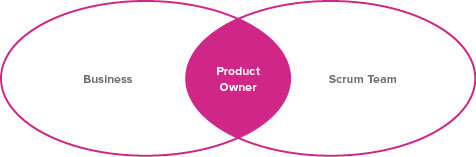
A stakeholder is anyone outside the Scrum Team with an interest in or an influence on the product. They include:
If stakeholders don’t know Scrum well, let them know how and why it works as it does. Explain that Scrum is an iterative process, where your understanding of exactly what needs to be delivered grows with each Increment.
Let your stakeholders know:
You’ll want to get agreement from stakeholders on what success looks like. One useful way of doing this is by running a Success Sliders exercise.
In our experience, the more empowered the Product Owner is, the more successful the project.
When you’re empowered you have the time and authority to develop and deliver the vision. Scrum relies on the power of self-organising teams.
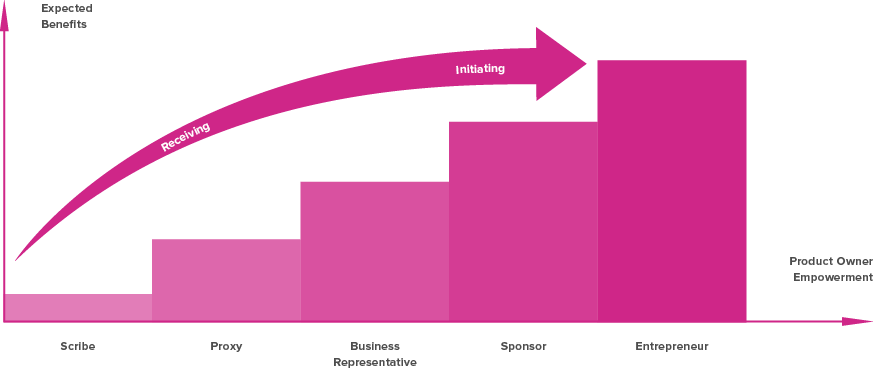
The best way for a Scrum Product Owner to get this empowerment is to demonstrate the value the product is delivering.
Next step: Get a detailed guide to working with stakeholders in Scrum.

Product discovery means finding out what product your customers need and how they want to use it. As Scrum Product Owner, you lead the discovery work.
You don’t do it alone though. You do it with stakeholders and the Scrum Team.
Product discovery involves coming up with your:
Once your MVP is live, discovery is an ongoing process of learning and improvement.
The product vision explains why you’re building the product, and how it will make the world a better place. It’s both goal and prompt, and helps get stakeholders and the Scrum Team behind the product.
Your strategy is the way you’ll achieve your vision by giving a set of customers something they need, and can’t get elsewhere. It defines your vision, target customer, and point of difference in the market.
Prototyping lets you test that the assumptions in your strategy about your customers and your product are correct, without the cost of building the full product. You want to:
The Google Design Sprint is a tried-and-tested, five-day prototyping process worth considering.
To learn what makes your customers tick, and create personas that capture this, check out your existing customer research, user statistics, analytics and search logs.
To get to the point you can start building your product, you need to map out how your customers will use it, and prioritise the smallest set of features needed to make this experience worthwhile: your Minimum Viable Product.
Next step: Get a detailed guide to product discovery for Scrum Product Owners.
The Agile Project Kick-off Kit gives you the tools, templates and tips you need for a successful discovery workshop.
“Brilliantly done - very impressive.” — Jimmy Ling, Agile Delivery Lead, NAB
Buy the kit
The Scrum Product Owner owns the Product Backlog. It’s your hands-on tool for guiding what gets built.
The Scrum Guide defines the Product Backlog as “an emergent, ordered list of what is needed to improve the product. It is the single source of work undertaken by the Scrum Team.”
The Product Backlog is:
At Boost we usually go for user stories. A user story in Scrum is an evolving description of something your customer will do using your product, written from the customer’s point of view, in the customer’s language.
Following the INVEST formula, user stories should be: Independent, Negotiable, Valuable, Estimable, Small, Testable.
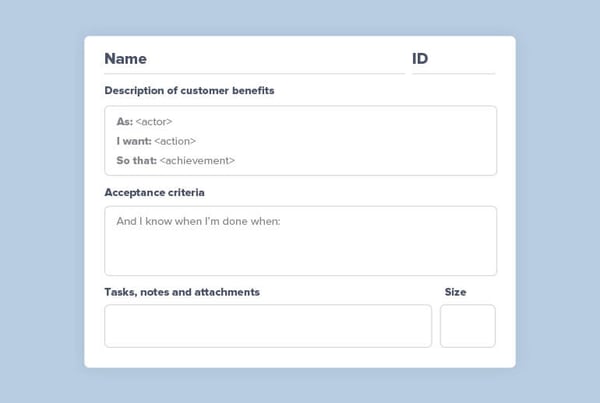
When the story is done, the Development Team will let you know the story is ready for you to check if it meets the acceptance criteria. Once it’s accepted, you’re another step closer to your Sprint goal and delivering more value to your customers.

The Scrum Product Owner needs a wide range of skills. You have to be good at collaborating but willing to make the big calls. You need to be able to communicate clearly and listen well. You have to be open to change but must stick fast to the principles and values of Agile.
All this can be challenging. But, once you get into the swing of things and really start kicking ass, it can also be enormously rewarding.
By focussing on the benefits you bring your customers, and harnessing the Scrum framework to sustainably deliver these benefits, the Scrum Product Owner can have a powerful, positive and lasting impact.
Here’s a collection of in-depth resources for Scrum Product Owners.
Learn how Scrum was developed, how it relates to Agile, why it works, and how to make it work best for you.
Find out what you can do as a Product Owner to build a successful Scrum Team.
How to set expectations with your stakeholders, plan how you’ll work together and get the support you need to succeed.
A step-by-step guide to coming up with a product vision and product strategy, testing if your idea is going to fly and defining your Minimum Viable Product.
Get the most from user stories in Scrum with a user story template, guide to good user stories, and tips on how to write them with your team.
Do you have a project that looks too big for one Product Owner? See why New Zealand’s National Library went for multiple Product Owners, and how they make it work.
We've pulled everything we know about succeeding as a Product Owner into one comprehensive PDF download.
“A great resource ... extremely thorough!” — Jess Limbrick, Product Owner, Life Education
Buy your guide